













 Action
 Survival
 Strategy
What Undead Invasion Is All About
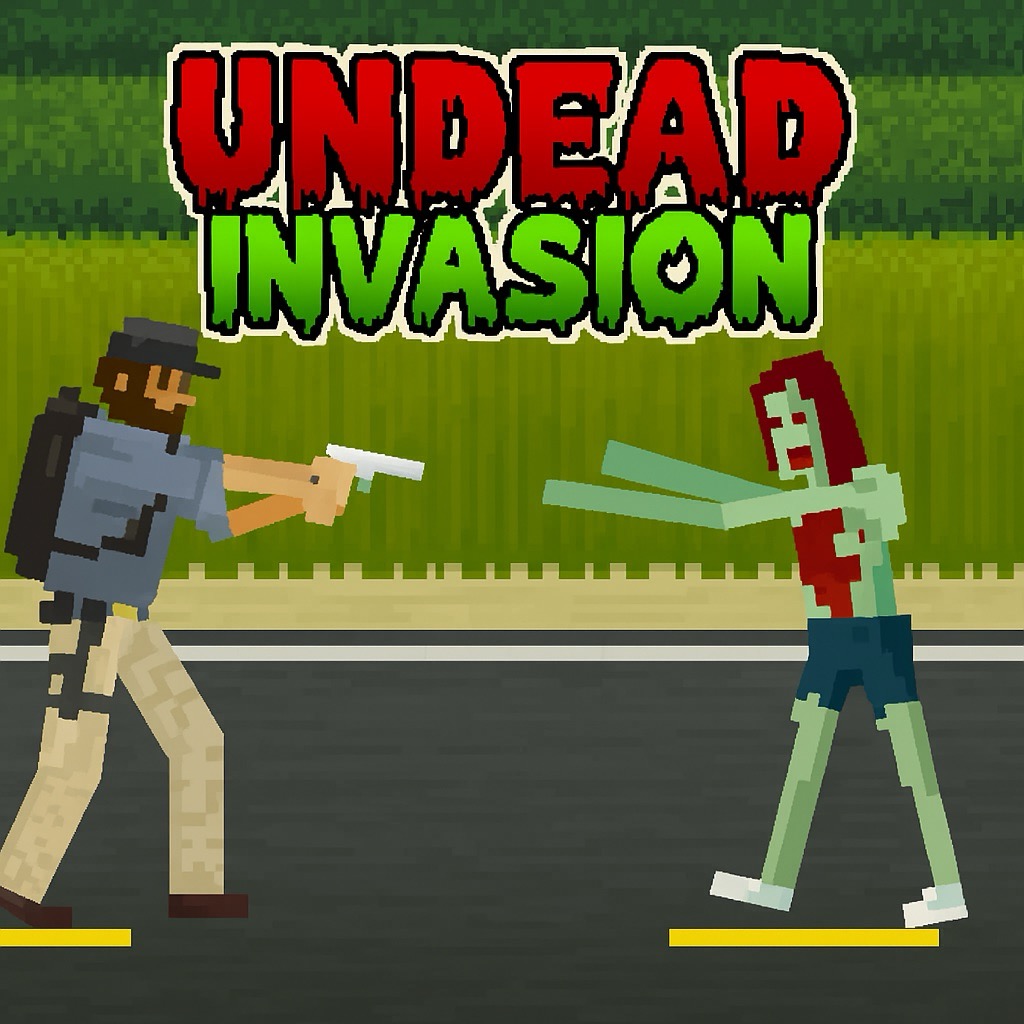
There's something genuinely satisfying about a game that knows exactly what it wants to be. Undead Invasion drops you into a 2D side-scrolling world where the dead just keep coming, and your job is to stop them. But here's the twist—it doesn't want you to just shoot your way through. Instead, it layers roguelike elements on top of tower defense mechanics, creating this addictive loop where every run teaches you something new.
The core idea is simple: waves of zombies hammer your defenses, and you use the resources you earn to build stronger barricades, upgrade your arsenal, and refine your strategy. What makes it click is how the roguelike side works. Each attempt randomizes your upgrade path, so no two runs feel identical. Maybe you get lucky with early weapon drops in one run and struggle from the start in another. That unpredictability keeps things fresh long after you'd normally move on.
I spent my first few attempts just trying to understand the rhythm of it all. The early waves feel almost too forgiving—you're shooting zombies, placing traps, upgrading casually, and thinking you've got a handle on things. Then the difficulty curve kicks in around wave four or five, and suddenly you're scrambling to plug gaps you didn't see coming. The learning curve is steep but fair.
How to Play Undead Invasion
The Control Scheme
One thing I appreciate about this game is that it doesn't bury you in complicated inputs. The controls are intuitive enough that you can focus on tactics rather than remembering button combos.
Left Click fires your current weapon. Hold it down for continuous fire when things get hectic.
Q swaps between your available weapons. Timing your switches matters more than you'd expect—having the right tool for each situation separates survival from getting overwhelmed.
E triggers a quick knife strike for close encounters. It chews through your ammo, but when a zombie gets too close, it's your best friend.
1 detonates any explosives you've placed. Positioning these correctly is an art form—get it right and you decimate entire clusters of undead.
R reloads your weapon. Sounds obvious, but during intense waves, it's easy to forget and find yourself empty at the worst moment.
Spacebar lets you stomp enemies directly below you. Surprisingly effective for clearing out clusters that slip past your main defenses.
The Fence Icon opens your building menu where you place structures, traps, and defensive elements. This is where your strategic planning comes into play.
Core Mechanics to Understand
Resource management is the backbone of everything here. I learned this the hard way by dumping all my resources into weapons while ignoring my defenses. Big mistake. Your barricades and traps matter just as much as your firepower, maybe more.
Each wave gives you resources based on how well you performed. You spend these on upgrades, new structures, and ammunition. The economy is tight enough that you can't do everything—you have to make choices about what to prioritize.
Weapons variety matters. Different guns and tools excel in different scenarios. Keeping two or three weapons upgraded gives you flexibility when situations change. Being able to adapt on the fly is what keeps you alive.
Trap placement is half the battle. Where you put your defenses determines whether zombies funnel into kill zones or slip through your gaps. Study where breaches happen most often and double down on those weak points.
Tips for Your First Runs
Start by experimenting in Playground Mode before committing to serious runs. It's a sandbox with no consequences, letting you figure out what trap combinations work and how different weapons feel. I probably spent six hours there before my first real attempt.
Don't try to upgrade everything at once. Pick one or two weapons to focus on early, and build your defenses around them. Spreading yourself thin means nothing gets strong enough to matter.
Watch your ammo count religiously. Running out of ammunition mid-wave is a quick way to die. It's better to conserve and switch to your knife for smaller threats than to waste precious bullets on zombies you could handle up close.
Learn to identify choke points in your defense layout. Undead Invasion rewards defensive thinking. The best runs aren't about having the biggest guns—they're about making the zombies flow exactly where you want them.
This game has that rare quality of being simple to grasp but deep enough to keep teaching you lessons after dozens of hours. The tension never quite goes away, and that's the point. Every wave survived feels earned, every failure teaches you something, and that "one more try" pull is dangerously strong. Give it a session when you have time to spare—you'll be glad you did.